
- You are here:
-
Home

-
Blog
- A Practical Guide for Stainless Steel Grade Selection
A Practical Guide for Stainless Steel Grade Selection

Across industrial, commercial and urban environments, facility operators and urban planners are redefining how they approach asset protection and environment safety. Stainless steel safety solutions have become a popular choice in the architecture of safety and compliance.
Over 60% of industrial, commercial, and municipal specifiers now cite durability as their primary purchasing driver when choosing safety. The shift signals a growing recognition that selecting the right material directly affects total cost of ownership, maintenance cycles, and visual integrity over time.
When it comes to stainless steel, the choice between 304-grade and 316-grade is more than a material decision: it's a strategic one. This guide provides a practical framework for choosing between 304 and 316-grade stainless steel, considering site context, exposure conditions, and total cost of ownership.
304 vs 316 Stainless Steel
When it comes to stainless steel grades, context drives performance. The ability to match the stainless steel grade to the unique environment ensures both visual and operational longevity.
The primary difference between stainless steel grades is long-term corrosion resistance and appearance when exposed to high chloride (salt/chemical) environments.
304 stainless steel remains the industry standard for inland and low-chloride environments. It offers the durability and corrosion resistance required for most general use cases.
316 stainless steel (also known as marine-grade stainless steel) is engineered for high-exposure environments where chloride-induced corrosion from salt or chemicals could compromise the structural integrity and appearance of the material.
Why Choose 316 Stainless Steel
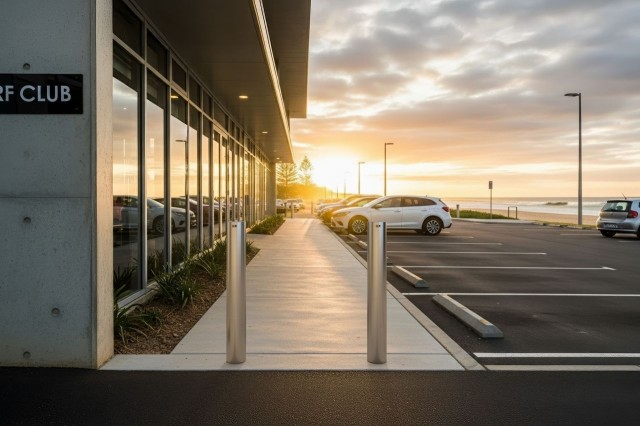
In environments where high exposure to salt, humidity, or chemicals is unavoidable, and/or long-term performance and appearance are critical, 316-grade stainless steel is the benchmark.
Typical locations for 316-grade stainless steel include:
- industrial facilities with direct exposure to chemicals or moisture such as chemical plants or equipment/vehicle wash zones;
- waterfront developments, marine fringes, and ports where marine grade stainless steel is required;
- commercial pool decks, car washes, or leisure centres;
- coastal areas where salt-air concentrations are high;
- surf zones ≤ 100 m from breaking surf or direct sea spray, and;
- inland urban, city and retail precincts where road salts, air pollutants, and exposure to environmental elements such as rain, or sun is high.
These types of applications all have one thing in common: the need for long-term performance and appearance is critical.
The benefits of 316-grade stainless steel are greater predictability and lower cost of ownership across the materials lifecycle. While 316-grade costs more upfront, it can deliver better long-term value due to:
- reduced risk of tea staining or surface corrosion;
- lower maintenance costs over time; and
- longer service life with fewer replacements.
Why Choose 304 Stainless Steel
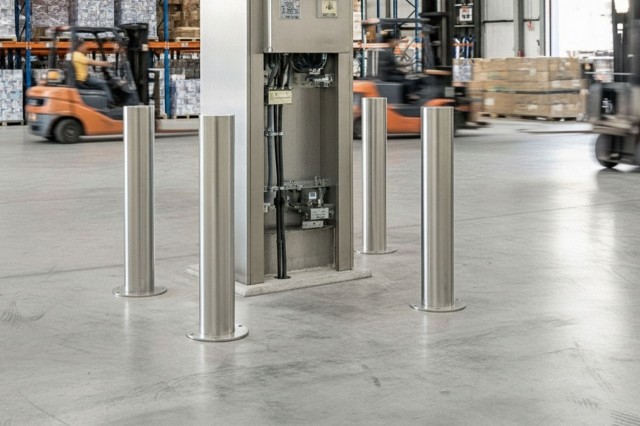
304-grade stainless steel is the default choice for most commercial and industrial environments. The combination of strength, visual appeal, and affordability makes it ideal for general-purpose use where a cost-effective solution is required without compromising appearance.
Typical locations for 304-grade stainless steel include:
- industrial facilities with low/no exposure to chemicals or moistureand require a cost-effective solution without compromising appearance;
- inland urban and suburban city centres;
- indoor and multi-story car parks;
- shopping centres and retail precincts with indoor or covered outdoor areas;
- apartment complexes; and
- schools, business parks, and residential neighbourhood's.
The benefit of 304-grade stainless steel is the balance between cost and durability. 304-grade stainless steel remains a cost-effective and reliable choice for many applications that demand professional appearance with compliance-grade performance.
The 3 Most Important Considerations When Choosing Stainless Steel Bollards
Compliance expectations and operational budgets mean the selection of stainless steel grades should be viewed not merely as a purchase, but as an investment in durability and lifecycle performance.
Decision-makers should no longer rely on a one-size-fits-all approach. 304 and 316-grade stainless steel bollards each play a role in the broader ecosystem of safety infrastructure.
Always consider these three important factors when choosing a stainless steel bollard:
- environment;
- operational risk; and
- total cost of ownership.
Ultimately, a proactive and context-driven specification enables safety infrastructure that endures, protects, and performs – long after installation.
Below is a helpful guide when choosing stainless steel bollards.
| Application | Typical Chloride Exposure | Recommended Grade |
|---|---|---|
| Surf Zone (< 100 m from breaking surf or direct sea spray) |
Very High | 316 |
| Marine Fringe (100–500 m) |
High – Moderate | 316 |
| Industrial Chlorides (Chemical plants, wash down areas) |
Variable but often High | 316 |
| Commercial Chlorides (Pool decks, hospitals) |
Variable but often High | 316 |
| Coastal Towns (~500 m – 2 km) |
Moderate | 304 or 316 |
| Near-coast (2 – 5 km) |
Low – Moderate | 304 or 316 |
| Inland Urban (> 5 km) |
Low | 304 or 316 |
Do you need help when it comes to selecting the right stainless steel safety infrastructure for your environment?
Our team of experts are ready to answer your questions and provide the guidance you need to make the right decision for your industrial or commercial safety.
Organise a free on-site assessment today.