

A Practical Guide for Residential Home Battery Safety Compliance

Residential home battery systems are becoming a standard feature of modern homes, driven by the rapid growth of rooftop solar and electric vehicle (EV) adoption. As more households store and manage their own energy, ensuring these battery units are safely installed and mechanically protected is critical.
Demand for residential battery storage has surged dramatically. Close to 75,000 home battery units were sold in 2024, but since the federal government's $2.3 billion discount scheme began in July 2025, almost 120,000 systems have already been installed in just four months. This rapid acceleration highlights both the pace of adoption and the growing need to protect battery units from impact, collision, and environmental damage in garages and outdoor areas.
Mechanical protection measures play a critical role. Properly specified and installed barriers, bollards, and enclosures play a crucial role in preventing damage to batteries, safeguarding warranties, and ensuring compliance with Australian Standards. They also give homeowners and installers confidence that systems are protected from everyday risks such as vehicle movement.
Battery installations should not only aim to meet the requirements of standards such as AS/NZS 5139:2019 "Electrical installations – Safety of battery systems for use with power conversion equipment" but should also aim to deliver practical protection in garages and outdoor areas where vehicle movements can cause incidents.
Suitable Safety Measures For Residential Home Battery Protection
Firstly, it is important to understand what is adequate mechanical protection for residential areas where vehicle and home battery systems may come into contact such as garages and driveways.
Non-fixed/movable structures such as benches, cupboards, or shelving generally do not provide suitable protection.

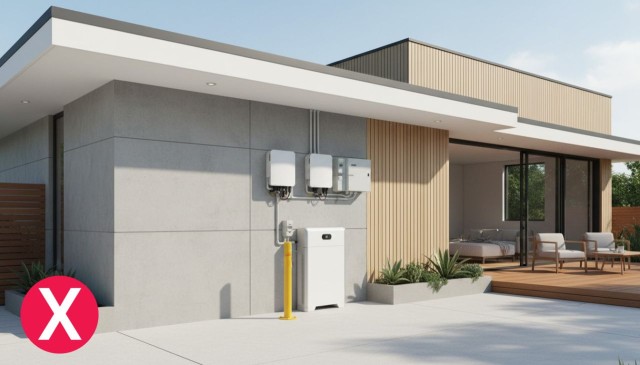
Bollards Can Help Mitigate Accidents
It's easy to underestimate the risks that residential battery systems can face. One of the most common hazards is known as vehicle 'pedal error', or unintended acceleration. These incidents typically occur when a driver intending to press the brake accidentally presses the accelerator, resulting in a sudden, low-speed collision. Even at modest speeds, these accidents can cause significant damage to nearby battery systems.
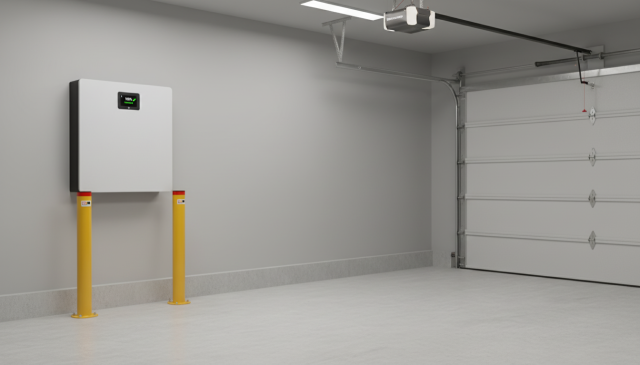
While temporary measures such as shelving, or vehicle-based systems like reverse cameras, parking sensors, and proximity alarms, may seem sufficient, only purpose-designed, fixed protective solutions like bollards or u-bars provide reliable, long-term protection and peace of mind.
Guidance For Installers
Installers of home battery systems should ensure that all battery systems located in areas accessible to vehicles, such as garages, driveways, or carports are protected by fixed, purpose-built mechanical barriers in accordance with AS/NZS 5139:2019 as discussed above. Garage walls or pillars alone are generally not considered adequate protection. Suitable measures include properly positioned bollards, u-bars, or reinforced barriers capable of withstanding potential vehicle impact forces.
Installers should also take a proactive approach to site assessment and documentation. Before installation, evaluate the likelihood of vehicle movement near the proposed battery location, confirm adequate clearance, and photograph both the pre-installation and completed protection measures. Keeping a clear record of barrier type and placement not only supports warranty and inspection requirements but also demonstrates due diligence in the event of an incident or audit.
Tailored Safety Solutions For Residential Home Battery Systems
Barrier Group offers a comprehensive range of bollard and u-bar asset protection solutions, designed to withstand and absorb vehicle impacts, ensuring long-term durability while providing a clear, visually effective barrier against unintended damage.
Every residential installation is unique and as Australia's trusted supplier of asset protection, we offer a comprehensive range of safety solutions to suit every residential installation. Installers should consider:
Bollards
Individually installed bollards allow for a customisable perimeter of protection, tailored to the specific layout and requirements of each residence. Our Compliance Bollard range is designed for installations where cost-effectively meeting a baseline compliance standard is the key priority. Cost-effective and purpose-built, this range provides an affordable level of mechanical protection without unnecessary additional specification or expense. Barrier Group also offers a range of standard and heavy duty bollards that offer more substantial protection.
U-Bars
As an alternative to individually placed bollards, u-bars can provide an effective protective enclosure around a battery system. They are particularly suited to installations where controlled side or rear access is necessary. Explore our range of U-Bars.
Custom Barrier Solutions
If you are unsure about what is required, our team of trusted safety experts are available to provide guidance on selecting appropriate mechanical protection and ensuring the safety and compliance of residential battery systems. Get in touch with our sales team for personalised advice at 1300 55 33 20 or via our contact form.
Disclaimer: The information and guidance provided regarding safety practices, equipment selection, or compliance is for general informational purposes only. You are responsible for independently evaluating and implementing any safety measures and must comply with all applicable laws, regulations, and industry standards.