

Manual vs. Electric: Why Industrial Manual Gates are Often the Better Option

In many industrial facilities, manual gates aren't a compromise – they're often the smarter, safer option.
Warehouses, manufacturing plants, logistics facilities, mezzanines, and loading docks operate on structured procedures with controlled movement. In these facilities, safety systems need to be predictable, intuitive, and reliable under all operating conditions. Industrial manual gates align naturally with this way of working. They're simple, and they work.
Rather than relying on sensors, motors, or automated logic, manual gates introduce a deliberate physical action. That moment of interaction forces awareness – a pause that reinforces safety procedures and accountability. Importantly, manual gates reduce the risk of unintended activation. There is no reliance on proximity sensors, remote triggers, or automated cycles that may not account for dynamic site conditions.
6 reasons why manual gates are the better option for industrial facilities:
- They remain fully operational during power outages or electrical faults;
- Access control remains visibly and physically clear to all users;
- Mechanical systems reduce maintenance requirements and failure points;
- Manual operation supports procedural compliance and conscious decision-making;
- Lower upfront and lifecycle costs reduce total cost of ownership; and
- For low- or intermittent-use locations, operation is often faster and more practical than automated alternatives.
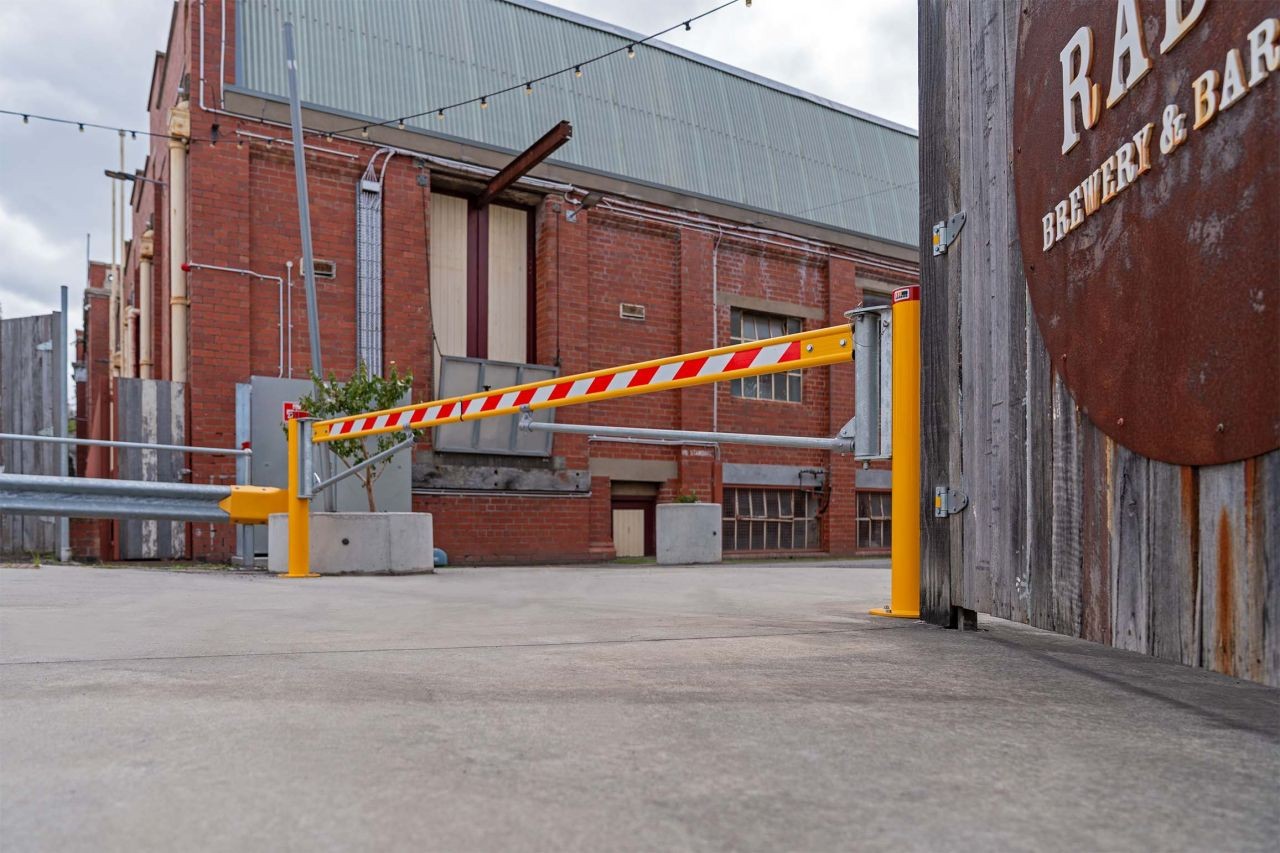
Where electric gates can introduce additional risk.
Electric industrial gate systems work well in the right setting – particularly in high-frequency, controlled-access environments. However, in many industrial facilities, they can introduce an unnecessary amount of operational complexity.
Automated systems depend on power supply, sensors, and ongoing calibration. When any of these elements fail, the result can be unpredictable gate behaviour, unplanned downtime, or unsafe access conditions. In facilities with mixed pedestrian and vehicle traffic, this unpredictability can increase risk rather than reduce it.
From a compliance perspective, simplicity often supports safer outcomes. Fewer components mean fewer points of failure, clearer responsibility, and easier inspection and on-going maintenance.
Fit-for-purpose safety, not technology for technology's sake.
The most effective safety systems are not defined by automation – they are defined by suitability to the task, environment, and frequency of use.Manual gates continue to be chosen for industrial facilities because they meet core safety objectives required in industrial operating environments including:
- Controlled access;
- Clear separation; and
- Consistent operation under real-world conditions.
In many cases, this leads back to manual gates as a reliable, compliant, and practical choice for industrial operators.
Case Study: Cleanaway Waste Management
Cleanaway Waste Management, one of Australia's leading waste management providers, selected a Manual Strut-Assisted Boom Gate to strengthen procedural compliance and access control at a high-traffic vehicle entry/exit point. This manual solution established a clearly defined, controlled access zone, supporting safer interactions between vehicles, staff, and visitors.
This case study demonstrates how manual gate systems can deliver meaningful safety outcomes - particularly in high-traffic industrial environments where reliability and operational simplicity are essential.
Explore our range of industrial gates
If you're unsure which solution best suits your facility, our experienced safety experts can provide practical guidance on selecting the right manual industrial gate to support safe, compliant operations.
Contact Barrier Group on 1300 55 33 20 or submit an enquiry via our contact form.