

Designing Airport Queue Management Systems for Changing Passenger Volumes

Airports are investing heavily in digital passenger processing, but physical passenger flow remains a critical part of the passenger experience.
Passenger volumes fluctuate. Queues move between locations. Gate configurations change. Temporary congestion occurs. What works at 8am may not work at 11am.
For this reason, airport wayfinding and queue management infrastructure needs to be considered as part of the broader operational environment - not simply as a fixed physical installation.
Design Wayfinding for Changing Passenger Volumes
Airport passenger volumes can fluctuate significantly across different hours, days, seasons and travel periods. Managing these fluctuations is a significant logistical challenge, particularly during peak travel when terminals and passenger processing areas experience increased demand.
During peak travel, flights are fuller, terminals are busier and passenger wait times can increase. Effective queue management is therefore important to maintaining organised and predictable passenger movement.
It's also important to consider the entire passenger movement environment. Passengers, luggage, trolleys, mobility aids and staff all influence how an airport environment needs to accommodate changing demand. Collision and obstruction risks can increase when wayfinding is not designed around the changing needs of the environment.
Airports should design their wayfinding around how the space needs to operate at different times, rather than around average passenger volumes.
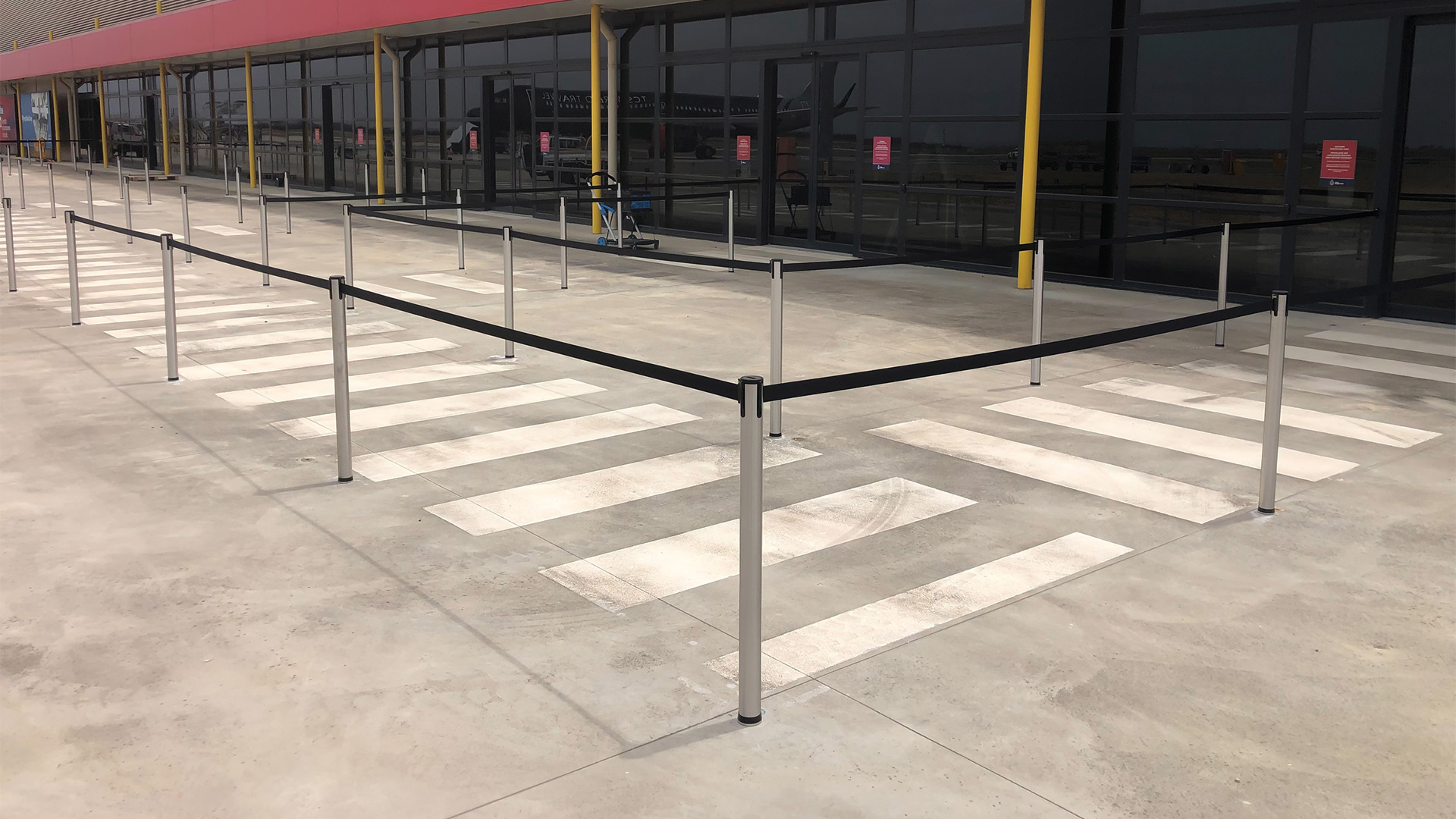
Fixed vs Flexible Queue Management Systems
The right approach depends on how frequently the space needs to change. Fixed and reconfigurable queue management systems each have a role to play, but understanding the difference is important when designing infrastructure for changing passenger volumes.
| Fixed Systems | Flexible Systems |
|---|---|
| Consistent wayfinding layout | Can be reconfigured |
| Suitable for permanent routes | Suitable for changing passenger flows |
| Limited ability to adapt | Can respond to operational changes |
| Permanent installation | Can accommodate temporary requirements |
Real-World Example - Western Sydney Airport
For high-volume environments, reconfigurable queue infrastructure can provide greater operational flexibility than permanently fixed layouts.
These considerations were particularly relevant during the development of the passenger and queue management facilities at Western Sydney International Airport (WSI). Following consultation, research and development, and environmental testing, a reconfigurable queue management approach (Neata Flexi Retractable Belt Post System) was selected to provide greater flexibility as passenger-flow requirements changed.
The Neata Flexi Belt Posts are installed using in-floor sleeves, allowing posts to be deployed, removed or repositioned as operational requirements change. This approach provides airport personnel with greater control over queue layouts without requiring a permanently fixed configuration.
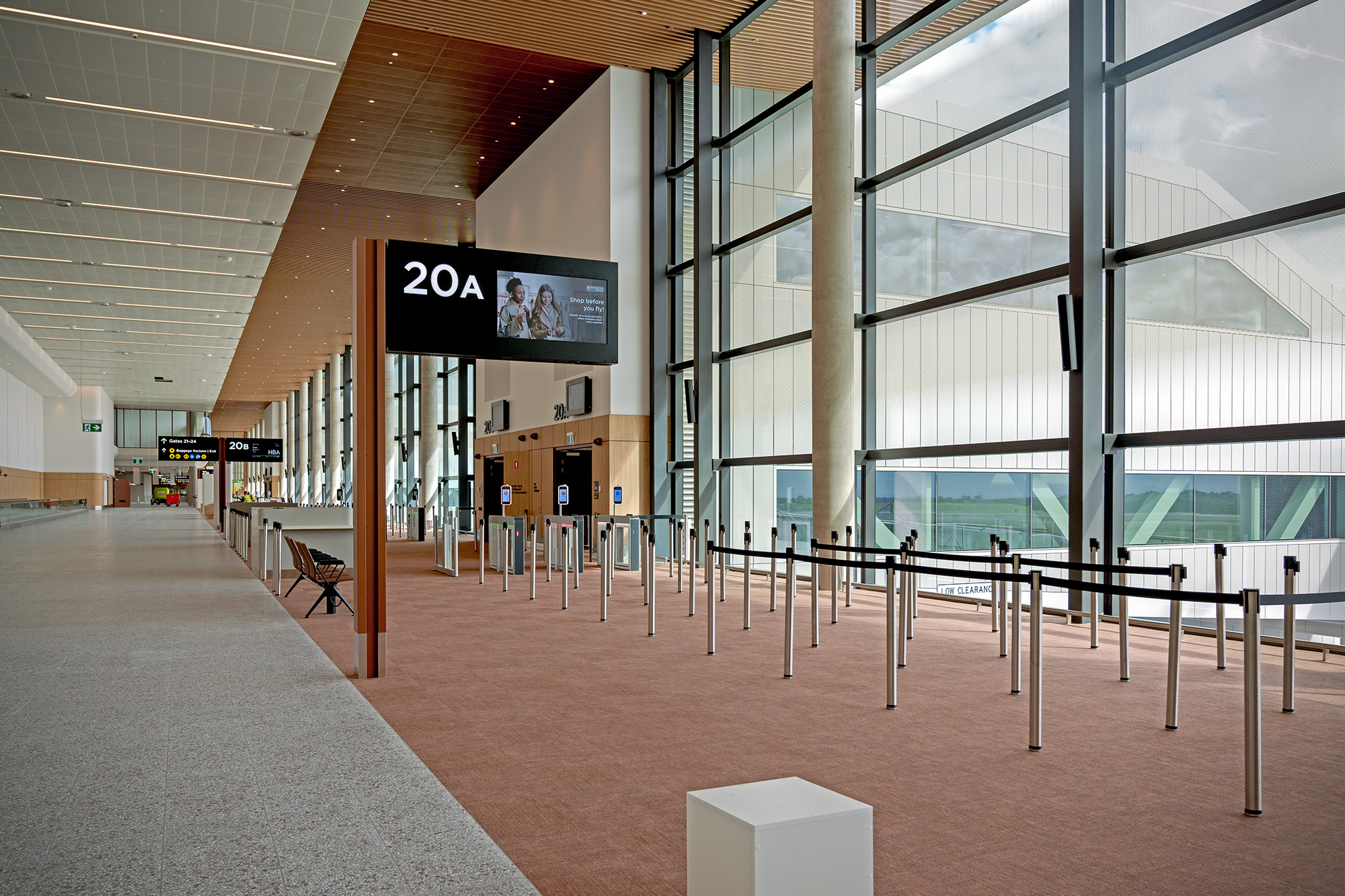
In high-traffic passenger environments, incidental contact with queue infrastructure is inevitable. Neata Flexi Belt Posts can tilt up to 10 degrees in any direction before returning to their original position, helping the system accommodate contact from luggage, trolleys and pedestrians without compromising the queue layout.
The terminal also incorporated a range of flooring substrates, requiring the installation method to be considered as part of the overall system design. Different in-floor sleeve options were selected according to the characteristics and suitability of each substrate.
The WSI project demonstrates how queue infrastructure can be designed around operational flexibility, rather than requiring passenger flows to conform to a fixed physical layout.
Click here to learn more about Neata Flexi Retractable Belt Barriers.
Collaborate with Barrier Group for Tailored Safety Solutions
Barrier Group works with aviation and transport facilities to assess site requirements and develop safety infrastructure around the way each environment operates. From queue management and pedestrian segregation to vehicle protection, our team can support the design, manufacture and installation of turn-key safety solutions.
For more information or to schedule an on-site consultation get in touch with a Barrier Group expert by calling 1300 55 33 20 or submitting an enquiry form online.